Whether you are a home user replacing a car remote key, an enterprise purchasing industrial-grade control equipment, or a store upgrading its access control system, it is easy to fall into the pitfalls of “only looking at price” and “blindly following the trend” when choosing key remote controls and controllers. This leads to buying the wrong products, inconvenience in use, and even increased later maintenance costs. This selection guide, combined with industry experience and 2026 market trends, helps you accurately select products from core dimensions, avoid common pitfalls, and buy cost-effective products that meet your needs.
Core Selection Principle: First clarify the usage scenario, then match product parameters, and finally compare quality and after-sales service. Do not blindly pursue “high-end” or buy low-quality products for cheap – the one that suits you is the best.
I. First Clarify the Scenario: 3 Core Scenarios, Corresponding to Different Selection Focuses
1. Home Scenarios (Cars, Garage Doors, Smart Locks)
Core Requirements: Convenience, Safety, Low Power Consumption, Small Size
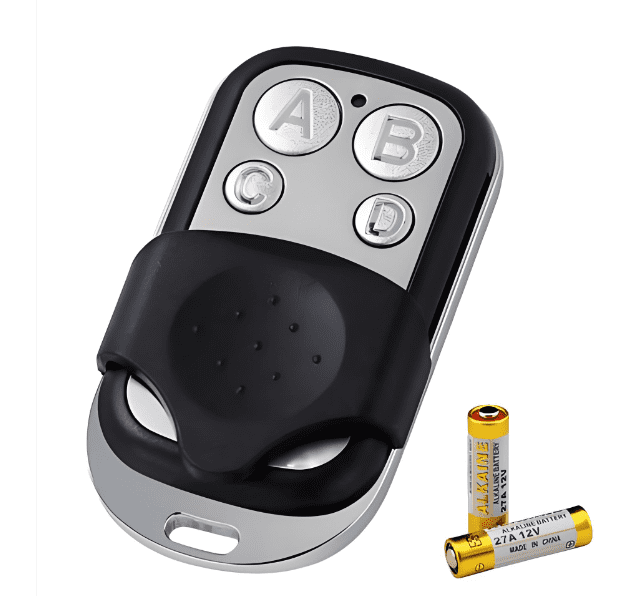
– Key Remote Control: Prioritize 315/433MHz frequency (compatible with most household equipment), clear buttons, long battery life (prioritize products that support low-power sleep), wear-resistant and drop-resistant shell material (not easy to damage during daily carrying); if it is a car remote, confirm compatibility with the vehicle model and support signal encryption (to avoid being cracked and improve safety).
– Controller: Prioritize small-size and easy-to-install models, support basic detection functions such as door magnetic and vibration (for example, on-board controllers can detect intrusion and trigger sound and light alarms), strong compatibility, able to adapt to remote controls of different brands, and have low-power management to avoid consuming device power.
2. Industrial Scenarios (Tower Cranes, Concrete Pumps, Mine Equipment)
Core Requirements: Long Distance, Anti-Interference, Precision, Durability
– Key Remote Control: Choose products with a transmission distance ≥ 50 meters (100 meters or more for complex working conditions), adopt a wireless solution with strong anti-interference (you can prioritize 315/433MHz ASK mode, which has low cost and long distance; if mobile phone convenient operation is needed, it can be matched with Bluetooth BLE solution), multi-button design (supports multi-command synchronous transmission), and waterproof, dustproof and drop-resistant shell (adapting to harsh environments such as construction sites and mines).
– Controller: Choose industrial-grade automotive chips (such as STM32 series), support multi-channel signal reception, have overload protection and fault alarm functions (such as automatic shutdown when the equipment is overloaded and timely feedback of faults), can adapt to complex environments such as high and low temperatures and humidity, have rich interfaces, can be connected with different industrial equipment, and support OTA remote upgrade for convenient later function iteration.
3. Commercial Scenarios (Access Control, Barriers, Elevators)
Core Requirements: Stability, Scalability, Easy Maintenance
– Key Remote Control: Choose models that can be authorized and revoked (support multi-person use, and permissions can be revoked after resignation to improve safety), stable signal, not prone to false triggers, long battery life, no need for frequent battery replacement.
– Controller: Support multi-remote control connection (can connect more than 10 remote controls at the same time), have data statistics and fault diagnosis functions (convenient for viewing usage records and quickly troubleshooting), simple installation, support linkage with access control systems and barrier systems, and convenient later maintenance.
II. Must-See Parameters: 4 Core Parameters Determine Whether the Product Is Easy to Use
1. Frequency Matching: This is the most critical parameter! The frequency of the key remote control and the controller must be consistent (commonly 315MHz, 433MHz, Bluetooth, NB-IoT, etc.), otherwise signal transmission cannot be realized. 315/433MHz is preferred for home scenarios, NB-IoT/4G solutions for industrial remote scenarios, and Bluetooth BLE solutions for short-distance convenient operations.
2. Transmission Distance: Choose according to the usage scenario. 10-30 meters is sufficient for home scenarios, and more than 50 meters is required for industrial scenarios. Note: The transmission distance will be affected by the environment (such as walls and obstacles), so you can leave an appropriate margin when selecting.
3. Power Consumption and Battery Life: Prioritize low-power products for key remote controls, with button battery life ≥ 1 year; rechargeable models can be selected for industrial remote controls; the controller needs to support sleep/wake-up functions, and the on-board controller needs to be compatible with on-board 12V power supply to reduce energy consumption.
4. Safety: For home and commercial scenarios, prioritize products that support signal encryption (such as AES-128 encryption) to avoid command cracking and copying; for industrial scenarios, choose controllers with short-circuit prevention and overload prevention to improve equipment operation safety.
III. Common Purchasing Pitfalls to Avoid
1. Only Looking at Price, Ignoring Quality: Low-quality products seem cheap, but they have unstable signals and are easy to damage. Frequent replacement later will increase costs; prioritize products with brands and test reports for higher cost performance.
2. Ignoring Compatibility: For example, buying a car remote key without confirming the vehicle model compatibility, resulting in inability to use; be sure to confirm the compatibility between the product and your own equipment before selection to avoid buying the wrong one.
3. Overpursuing High-End Parameters: Industrial-grade products are not needed for home scenarios, as they have redundant functions and high prices; choose according to your own needs, and it is sufficient to meet your needs.
4. Ignoring After-Sales Service: After the product fails, there is no after-sales guarantee, and it cannot be repaired or replaced; prioritize merchants with perfect after-sales service, which support return and exchange, and maintenance guidance to reduce later risks.
Summary: The core of selection is “adaptation.” Clarify your own usage scenario and core needs, and refer to the above parameters and pitfall avoidance guide, you can quickly find the right key remote control and controller. If you have specific scenario needs (such as a specific vehicle model or industrial equipment model), you can leave a message for consultation, and we will provide you with accurate selection suggestions.